
Tag: materials science

ML4MatSci: Hands-on Machine Learning for Research in Materials Sciences – 2nd PhD Summer School

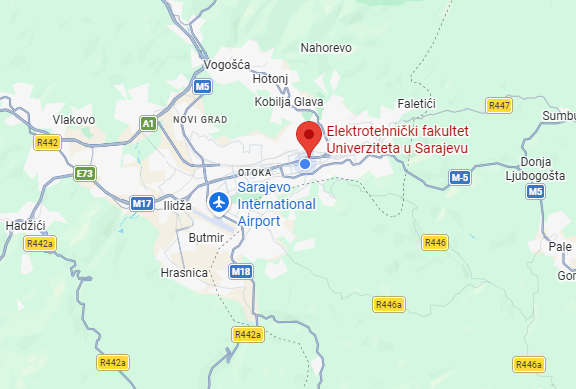
📍 Sarajevo, Bosnia and Herzegovina
📅 10-12 June 2026

The ML4MatSci PhD School aims to equip current and prospective PhD students with a solid foundation in machine learning (ML) methods, demonstrated through real-world research led by scientists actively applying ML in their own work.

Our goal is to empower and inspire PhD students to confidently integrate ML into their research, fostering creativity, critical thinking, and innovation in applying data-driven approaches to materials science and related fields.


🔍 Why attend

The ML4MatSci PhD School offers a unique opportunity to:

  • Discover how cutting-edge AI is transforming materials science research
  • Gain hands-on experience with modern tools for modeling, simulation, and characterization
  • Present your research and receive expert feedback
  • Network with leading researchers and peers
  • Join a growing interdisciplinary community at the intersection of AI and materials science

👥 Target Audience

  • PhD students and postdoctoral researchers in Materials science, Physics, Chemistry, Computer science
  • Aspiring PhD students interested in AI-driven research

📚 Prerequisites

  • Basic programming knowledge (Python preferred)
  • Fundamentals of ML and AI
  • Understanding of datasets and evaluation metrics
  • Enrollment in (or preparation for) a PhD program in a relevant field

🔬 Scientific Focus Areas

  • Generative AI for Materials Science
  • Agentic AI & Multi-Agent Systems
  • Digital Twins of Materials and Processes
  • Large Language Models (LLMs)
  • Graph Neural Networks & Physics-informed Neural Networks
  • Foundation models for materials science
  • Explainable AI (XAI) and multi-modal learning
  • Tools & Languages: Python, PyTorch, TensorFlow, JAX, Scikit-learn

🧪 Teaching Format

The school runs over three intensive days, combining theory and practice:

  • 📚 Lectures – Advanced AI topics delivered by leading experts
  • 💻 Hands-on Sessions – Practical workshops on ML tools and methods
  • 🏭 Industrial Session – Real-world ML applications in industry
  • 🎤 Poster Session – Present and discuss your research
  • Elevator Pitches – Short, impactful research presentations

📝 Application Details

📄 Required Documents

Applicants must submit:

  • Short CV (1 page)
  • Motivation letter (½ page)
  • Poster title and abstract (¼ page)
  • Travel cost estimate (in Eur)
  • Statement on participation without EU funding

💶 Financial Support

The EuMINe COST Action is pleased to offer reimbursement for up to 20 participants, covering travel expenses and daily allowances. Participants will be selected based on:

  • Interest in the school by submitting the CV, a motivation letter and a poster abstract 
  • Gender and age balance
  • Geographic inclusivity, with preference for Inclusiveness Target Countries (ITCs) and Near Neighbour Countries (NNCs)

📅 Important Dates


👩‍🏫 Lecturers

  • Jacob Goldberger – Bar-Ilan University (Israel)
  • Keith Butler – University College London (UK)
  • Salim Belouettar – Luxembourg Institute of Science and Technology (Luxembourg)
  • Patrícia Ramos – Polytechnic of Porto / INESC TEC (Portugal)
  • Michael Moeckel – Technische Hochschule Aschaffenburg (Germany)
  • Amila Akagic – University of Sarajevo (Bosnia and Herzegovina)
  • Amra Hasecic – University of Sarajevo (Bosnia and Herzegovina)

📌 Programme

The complete programme will be available soon.


🧑‍💼 Organizers

  • Michael Moeckel – Technische Hochschule Aschaffenburg (Germany)
  • Amila Akagic – University of Sarajevo (Bosnia and Herzegovina)
  • Amra Hasecic – University of Sarajevo (Bosnia and Herzegovina)
  • Francesco Mercuri – National Research Council (Italy)

📍 Practical Information

Location: Sarajevo, Bosnia and Herzegovina

Venue

Faculty of Electrical Engineering
University of Sarajevo
Kampus Univerziteta
71000 Sarajevo

📧 Contact:
Amila Akagic — aakagic@etf.unsa.ba
ML4MatSci: Hands-on Machine Learning for Research in Materials Sciences – 22-24 July 2025 (Aschaffenburg, Germany)

ML4MatSci School is designed to equip current and prospective PhD students with the essential knowledge and practical skills needed to apply machine learning techniques in the field of Materials Informatics. Through a combination of lectures, hands-on sessions, and collaborative discussions, participants will gain a solid foundation for integrating data-driven approaches into their research.

🎓 PhD School: Machine Learning in Materials Science

The PhD School equips participants with a solid foundation in machine learning (ML) methods, demonstrated through real-world research led by scientists actively applying ML in their own work.

Our goal is to empower and inspire PhD students to confidently integrate ML into their research, encouraging creativity, critical thinking, and innovation in applying data-driven approaches to materials science and related fields.


🔍 Key Scientific Focus Areas

  • Fundamentals of Machine Learning & Artificial Intelligence
    Core concepts, workflows, and practical considerations
  • Image Processing for Materials Characterization
    From segmentation to feature extraction in microscopy and beyond
  • Large Language Models (LLMs) & Their Emerging Applications
    Using LLMs for scientific text mining, synthesis, and discovery
  • Datasets, Data Quality & Evaluation Metrics
    How to prepare, validate, and measure the impact of your data
  • Bayesian Optimization & Active Learning
    Smart experimentation and efficient exploration of design spaces
  • Advanced Topics in AI-Driven Materials Science
    Including:
    • Generative models (e.g., for molecule or structure generation)
    • Explainable AI (XAI)
    • Multi-modal learning
    • AI for materials discovery pipelines

📝 Registration & Abstract Submission

Application

Recommended Prerequisites

To ensure participants can fully benefit from the school, we recommend the following:

  • A basic understanding of programming languages, preferably Python or a similar language.
  • Enrollment in, or preparation for, a PhD program in physics, solid-state chemistry, materials science, computer science, or a related field.

Financial Support

The EuMINe COST Action is pleased to offer reimbursement for up to 25 participants, covering travel expenses and daily allowances. Participants will be selected based on:

  • Interest in the school by submitting a motivation letter and a poster abstract 
  • Gender and age balance
  • Geographic inclusivity, with preference for Inclusiveness Target Countries (ITCs) and Near Neighbour Countries (NNCs)

📅 Important Dates


🎤 Lecturers

  • Jacob Goldberger, Bar-Ilan University (Israel)
  • Keith Butler, University College London (UK)
  • Pascal Friederich, Karlsruhe Institute of Technology (Germany)
  • Milica Todorović, University of Turku (Finland)
  • Patrícia Ramos, Polytechnic of Porto, INESC TEC (Portugal)
  • Michael Moeckel, Technische Hochschule Aschaffenburg (Germany)
  • Amila Akagic, University of Sarajevo (Bosnia and Herzegovina)


📌 Preliminary Programme

🗓️ Day 1 – July 22, 2025 (Aschaffenburg)

08:00 – Registration
09:00 – Welcome & Program Overview
09:30 – Introduction to Machine Learning I (Michael Moeckel, Patricia Ramos)
10:30 – 1st Hands-on Session
11:00 – Coffee Break
11:30 – Introduction to Deep Learning and Computer Vision with Applications in Medical Imaging and Explainable AI (Amila Akagić)
12:00 2nd Hands-on Session: Medical Imaging & Explainable AI
13:00 Break
14:00 Industry Session (Jorrit Voigt)
15:00 – Introduction to Machine Learning II (Michael Moeckel)
16:00 – Use Case: Additive Manufacturing
16:30 – Coffee Break
17:00 – Generative Modelling for Property Driven Molecular and Material Discovery (Patricia Ramos)
18:00 – 3rd Hands-on Session
19:00 – Elevator Poster Pitches
20:00 – Poster Session I & Reception

🗓️ Day 2 – July 23, 2025 (Würzburg)

07:45 – Departure from Aschaffenburg to Wuerzburg by bus
09:00 – Arrival & Welcome
10:00 – Uncertainty Calibration (Jacob Goldberger)
11:00 – Coffee Break
11:30 – Bayesian Optimization & Active Learning for Autonomous Decision Making in Materials Optimization (Pascal Friedrich)
12:00 – 4th Hands-on Session: Bayesian Optimization
13:00 – Break
14:00 – On Multilingual Foundation Models (Goran Glavaš)
14:30 – Elevator Poster Pitches
15:30 – Poster Session II
16:30 – Departure and short walk to Wuerzburg residence
17:00 – Guided excursion at the residence: ML4Materials in artwork conservation and reconstruction
18:00 – Free time for socializing, sightseeing and dinner in Wuerzburg
21:00 Departure from Wuerzburg to Aschaffenburg by bus

🗓️ Day 3 – July 24, 2025

08:30 – LLMs for Materials Science (Keith Butler)
09:30 – 5th Hands-on Session on LLMs
10:00 – Coffee Break
10:30 – Advanced Topics (Milica Todorović)
11:30 – 6th Hands-on Session: Advanced Topics
12:00 Closing and departure from Aschaffenburg


👥 Local Organizers and Management

  • Michael Moeckel, Technische Hochschule Aschaffenburg (Germany)
  • Amila Akagic, Faculty of Electrical Engineering, University of Sarajevo (Bosnia and Herzegovina)
  • Francesco Mercuri, National Research Council in Bologna (Italy)
  • Local host: NISYS PhD school Aschaffenburg-Coburg-Würzburg


✈️ Getting to Aschaffenburg

Directions to Campus
(Würzburger Straße 45, Aschaffenburg)

✈️ Nearest Airport:

The closest airport is Frankfurt am Main (FRA). From there, you can reach Aschaffenburg Central Station by:

  • ICE high-speed train (approx. 1 hour)

  • Local train (HLB) (approx. 1 hour 15 minutes)

🚆By Public Transport:

Arrive at Aschaffenburg Central Station. From there, you have two easy options to reach the campus:

  • Take the regional train (direction: Miltenberg) and get off at Aschaffenburg Hochschule station.

  • Alternatively, take one of the following bus lines: 5, 15, 40, 41, 47, or 63. Get off at the “Hochschule” stop.

🚗By Car from Würzburg:

  • Take the A3 and exit at Aschaffenburg Ost
  • Follow the B26 and turn left onto Stengerstraße, continuing along the Südring
  • After about 2 km, take the exit for Würzburger Straße and turn left
  • Campus access: via Flachstraße, then turn left into Bessenbacher Weg

🚗By Car from Frankfurt/M.:

  • Take the A3 and exit at Aschaffenburg Stockstadt
  • Follow the B8 towards Mainaschaff, then take the B26 exit towards Darmstadt/Stadtring
  • Turn onto Westring and continue to Adenauerbrücke/Westring
  • Stay on Südring and follow signs to Haibach/Zentrum/Gailbach or Hochschule
  • Turn right onto Würzburger Straße
  • Campus access: via Flachstraße, then left onto Bessenbacher Weg